
What is Dialectical Behavioral Therapy (DBT)?
- Serenity Sam

- Dec 16, 2025
- 2 min read
Updated: Mar 26









What Is DBT and Why Do People Use It
Strong emotions can be complicated to manage. When feelings escalate quickly or linger longer than expected, it can affect decision-making, relationships, and day-to-day functioning.
Dialectical Behavior Therapy, or DBT, was developed for people who experience emotions intensely and want practical ways to handle them more effectively.
DBT isn’t about ignoring emotions or trying to think them away. It focuses on building skills that help you get through difficult moments without adding more stress or regret.
What DBT Is, in Real Terms
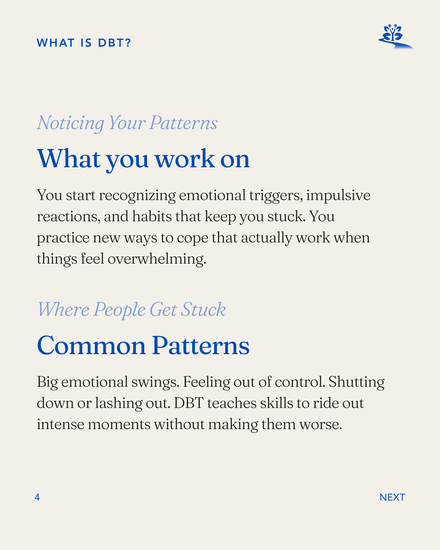
DBT is a structured form of therapy designed to help people who experience emotions intensely. That might show up as mood swings, impulsive decisions, emotional shutdowns, anxiety spikes, or feeling overwhelmed by everyday stress.
Instead of asking you to “think positive,” DBT teaches you how to stay grounded when emotions spike, how to tolerate distress without spiraling, and how to respond in ways that align with what you actually want long term.
It’s practical. It’s skill-based. And it’s built for real-life situations, not perfect conditions.
Why DBT Helps When Other Things Haven’t
When emotions are intense, logic alone usually doesn’t work. DBT recognizes that and meets you where you are.
DBT is built around the idea that two things can be true at the same time. You can accept yourself as you are and still want to change patterns that aren’t working. You can feel deeply and still learn how to stay in control of your actions.
That balance is the core of DBT.
What People Often Come to DBT For
A lot of people find DBT helpful when they feel emotionally reactive or stuck in cycles they can’t seem to break. That might look like going from zero to one hundred emotionally, struggling in relationships, feeling overwhelmed by stress, or reacting in ways that don’t match your values once the moment passes.
DBT doesn’t judge those reactions. It focuses on building skills so those moments don’t run the show.
The Skills DBT Teaches
DBT focuses on a few key areas. Learning how to tolerate distress without making it worse. Learning how to regulate emotions instead of being blindsided by them. Learning how to stay present when your mind wants to spiral. And learning how to communicate your needs clearly.
These are skills you practice over time, not concepts you’re expected to master overnight.
What DBT Can Lead To
Over time, DBT helps create more stability. Emotions still happen, but they feel more manageable. Stress becomes something you can handle instead of something that knocks you out. Relationships often feel clearer and less chaotic.
DBT isn’t about becoming emotionless or “fixed.” It’s about having tools you can actually use when life gets messy.
Is DBT Right for You
DBT can be especially helpful if you feel things deeply, react quickly, or struggle to calm yourself once emotions take over. It’s also useful if you’ve tried therapy before and felt like insight alone wasn’t enough.
The goal isn’t perfection. It’s progress, steadiness, and learning how to support yourself through difficult moments.
If you’re curious about DBT or want to explore what therapy could look like for you, learning more is a solid first step. Therapy should feel helpful, not confusing or overwhelming.


Comments